
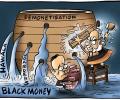
'Demonetisation, is in principal, a mistake, because it involves a theft -- a taking of private property by the State.' 'It is one of those bad Indian ideas that has been tried twice in the past, with two failures for the record books.' 'This cloud over the economy will probably remain as long as Modi is in power.'

Many in the US establishment must hope that the crisis would put the brakes on China's growing military might. Well, it ain't gonna happen, says T T Ram Mohan, who was appointed a member of the prime minister's economic advisory council on Wednesday, October 28, 2021.
Recent rates cuts by most banks may not have a significant impact on margins, say analysts.
'Modi is likely to make more announcements to win or retain popularity, and put himself at the centre of things even more than now,' says T N Ninan.

This is the lowest investment grade rating.

The government is somehow convinced that selective low-rate lending will stimulate demand and accelerate economic growth that plunged to a four-year low of 4.4 per cent in the first three months of 2013-14.

Even US equities are now back to end-2014 levels.
China is keen to rebalance its economy towards higher consumption, services, technology use and value-added exports. The hope is that its currency will strengthen as the world embraces it as a global trade and reserve currency, say Abheek Barua & Bidisha Ganguly.

Denmark topped the list of the 144 nations.

Investors may increase exposure to mid and small-cap stocks as their risk-reward profile is more attractive currently, suggest Nitin Singh and Vinay Joseph.

'Every time I step on stage, I feel like I'm performing the play for the first time,' Manoj Joshi tells Sadiya Updade.

'We forecast real GDP growth to moderate to 6.7 per cent in the year ending March 2018.' 'However, as disruption fades, we expect to see a rebound in real GDP growth to 7.5 per cent in the next fiscal year.'

You must remain invested in bank deposits, unless you are considering the idea of earning higher returns by moving to gilt or liquid funds, says Adhil Shetty, CEO, BankBazaar.com.

The temptation to rehash Manmohanomics is not going to deliver the achche-din that Narendra Modi has promised, warns Sriram Balasubramanian.
Some analysts argue that Beijing has been too cautious in lowering rates and freeing up cash in the banking system, keeping real interest rates too high given low returns on investment.

Asia has opened largely in the green ahead of a raft of Chinese data due during the day.

'Our stable outlook currently points to the fact that the ratings are likely to remain stable for the next couple of years.'

Global brokerage firm CLSA is positive on India's growth stroy.
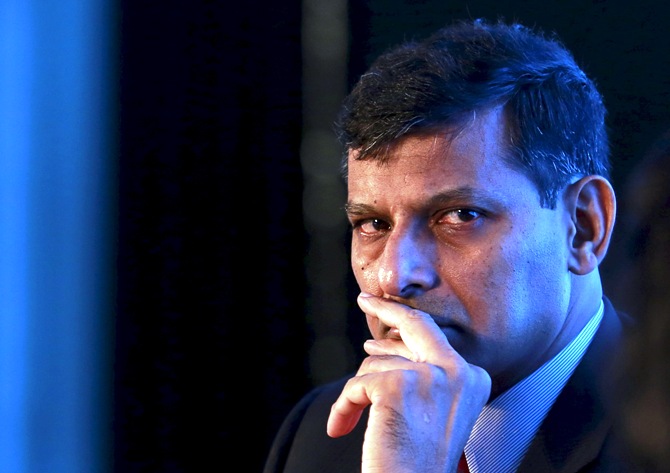
'Rajan brought in a healthy air of competition in the banking sector.'

Despite the rally, on the basis of valuations, Indian markets aren't too expensive, says Christopher Wood, managing director and equity strategist at CLSA.

'...Unless we muck up our policies.' 'We have to become a modernised economy.' 'Our institutions should be stronger. And that is most important.' 'The rule of law should prevail and contracts should be enforced.' 'Above all, we have to recognise the importance of globalisation.' 'It is in our favour at this stage. We should grow and become globally competitive.'

The IMF's predictions for India's near-term growth may seem rosy, but the usual caveats apply - that is, we are apt to under-perform.
After one year in power, Prime Minister Narendra Modi is pretty much on the back foot, even if he continues to display bravado in his public pronouncements. He knows within his heart that he has wasted a lot of his political capital without getting much in return, says M K Venu.
One can expect significant changes at India's banks in ensuing months.

Optimism about a stable govt at the Centre, a demand revival and falling oil prices buoyed the markets.

'Tilting at the Government in English in front of India may make him feel like Joan of Arc, but without a feel for Bharat he will merely be Don Quixote,' says S Muraleedharan, former managing director, BNP Paribas.

Rahul Gandhi has the potential to grow into a good, effective, leader of the Opposition provided he puts his heart and soul into it, with a willingness to learn, says B S Raghavan, the distinguished civil servant who worked closely with India's first three prime ministers.
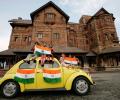
Though growth in China is unlikely to slow down soon, India should prepare to take advantage of a shifting of gears there.

Governor Rajan can be more unambiguously pro-growth.

The resilience of many emerging markets, notably China and India, in the aftermath of the Lehman shock further strengthened this sense of manifest destiny.

With cash -- the primary medium of exchange -- all but disappearing, it is now unlikely that the expected fillip to demand on account of a good monsoon and proceeds from the Seventh Pay Commission payout will materialise.
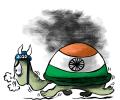
'If India can only grow at 5%, why bother spending time on the country?' asks Akash Prakash.

The rupee has been falling for five straight weeks, taking its losses this quarter to 6.6 per cent, making it the worst performing currencies in Asia during this period.

India still has to go a long way to implement reforms in various sectors.

The Budget will obviously be crucial. But US President Donald Trump may have even more of an influence than Finance Minister Arun Jaitley when it comes to sentiment, argues Devangshu Datta.
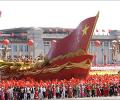
Premier Li Keqiang highlighted his government's performance in the last one year and the challenges ahead in various fields. Compared to other reports by his predecessors, Li spoke more frankly about the mounting challenges faced by the country. Srikanth Kondapalli on the two recent Chinese parliament sessions.

The manufacturing sector during the fourth quarter recorded a growth rate of 9.3 per cent while the farm sector grew at 2.3 per cent.

Beijing did not announce expected policy support over the weekend

Experts hail Budget 2015 as a progressive, growth oriented one.

It would be a miracle indeed if we grow at 7/8 per cent a year over the current and next few years, says A V Rajwade
